In the world of business ownership, we worship “The Grind.”
We celebrate the 80-hour work week and the founder who answers Slack messages at 2:00 AM.
We treat the brain like a machine that just needs more coffee to produce more output.
I’ve spent enough time in the strategy trenches to know this is a lie.
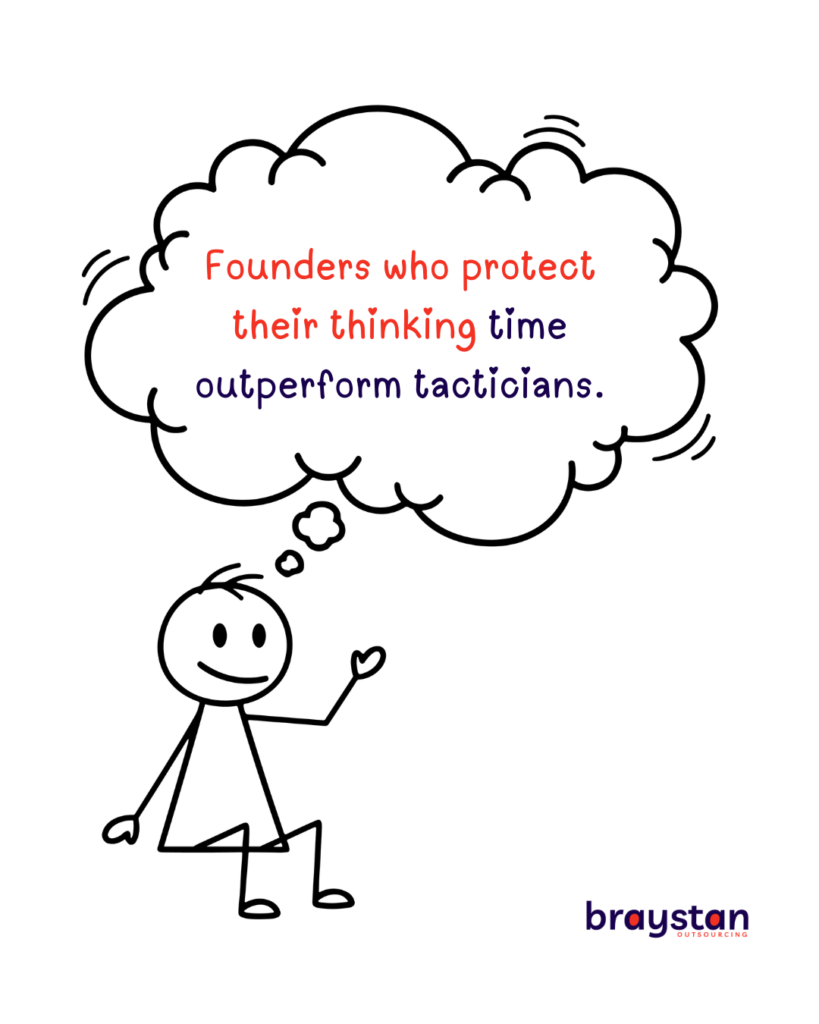
When a founder is depleted, their decisions become reactive. They start copying competitors. They lose the ability to see the “long game.” In short: A tired founder is a tactician; a rested founder is a visionary.
The ROI of “Thinking Time”
Most people see “white space” on a calendar as a void to be filled. I see it as an investment.
When you protect your creative energy, you aren’t “relaxing.” You are building the capacity to:
-
Identify Market Shifts: You see the trend before it’s a Case Study on LinkedIn.
-
Simplify Complex Problems: You find the 20% of effort that drives 80% of the results.
-
Lead with Clarity: You give your team at Braystan a clear “Why,” so they don’t have to guess the “How.”
The “Life Aligned” Approach to Strategy
This isn’t just theory for me. It’s why I built a wellness stationery brand.
I realized that if I didn’t have a physical space to offload my thoughts—a place to be “analog” in a digital world—my marketing strategy became stale. My stationery products are tools for intentionality. They are designed to help founders move from “What do I have to do?” to “Where am I actually going?”
Protecting the Asset (How to Operationalize Rest)
If you are a founder-led business targeting the US market, your unique perspective is your competitive advantage. If you burn out, your brand loses its soul.
How do we protect that asset?
-
Delegation as Self-Care: Outsoring isn’t just about saving time; it’s about saving cognitive load. By handing the repetitive execution to a trusted team, you reclaim the headspace needed for high-level strategy.
-
Scheduled Boredom: I am a big believer in “unplugged hours.” No screens, no Slacks. Just a notebook and a pen. This is where my best “Side Quest” ideas are born.
-
Saying No to “Good” Opportunities: To protect your energy for “Great” ideas, you have to be skeptical of “Good” ones.
My Field Notes (
-
The Ritual: I spend the first 30 minutes of my day with a Life Aligned Daily Flow sheet. No emails until my internal “strategy” for the day is set.
-
The Result: The most successful campaigns I’ve run for Braystan clients didn’t come from a 4-hour brainstorming session. They came from a 15-minute walk where I finally let my brain breathe.
-
The Skeptic’s Take: Don’t confuse “being busy” with “being effective.” Most of your “to-do list” is just a distraction from the one big decision you’re avoiding.
The Bottom Line: Your creative energy is the most valuable line item on your balance sheet. Stop spending it on $20/hour tasks.
